(This article is written by Ashika Dutta, New Law College, Pune, B.B.A. LL.B., Third Year during her internship at LeDroit India)

Scope of the Article
- The meaning of orphan works, including true, apparent and partial orphanhood, and the difference between an unlocatable owner and the public domain.
- The infringement risk created by Sections 14, 51, 55 and 57 of the Copyright Act, 1957, and the limited role of Section 52 exceptions.
- India’s special compulsory-licensing route under Section 31A, Rule 11 and Form III, including diligent search, advertisement, inquiry, royalties and reappearing owners.
- Landmark and recent case law on copyright balance, strict statutory licensing, fair dealing and emerging digital uses.
- Practical illustrations involving archival photographs, unpublished manuscripts, documentary film and large-scale digital or artificial-intelligence uses.
- Comparative models in the European Union, United Kingdom, Canada and United States, followed by an India-focused reform proposal and user checklist.
Abstract
An orphan work remains protected by copyright even though no prospective user can identify or locate the rights owner. This separation between subsisting rights and failed rights clearance can suppress preservation, scholarship, documentary production and digital access without producing income for any creator. This article examines the Indian response through Section 31A of the Copyright Act, 1957, Rule 11 and Form III. It explains why a diligent search is evidentially important but does not itself authorise use; why fair dealing must rest on a statutory purpose; and how compulsory licensing, notice, attribution, royalty escrow and compensation can reduce legal uncertainty.
Landmark decisions are considered alongside the Delhi High Court’s recent interim ruling in ANI Media v OpenAI. Comparisons with the European Union, United Kingdom, Canada and United States reveal the advantages of searchable registries, tailored licences and limited remedies. The article proposes a tiered Indian framework that protects owners while making socially valuable orphan works responsibly usable.
Keywords: Orphan Works; Copyright Licensing; Diligent Search; Section 31A; Digital Archives; Rights Clearance
1. Introduction: A Work with Rights but No Reachable Owner
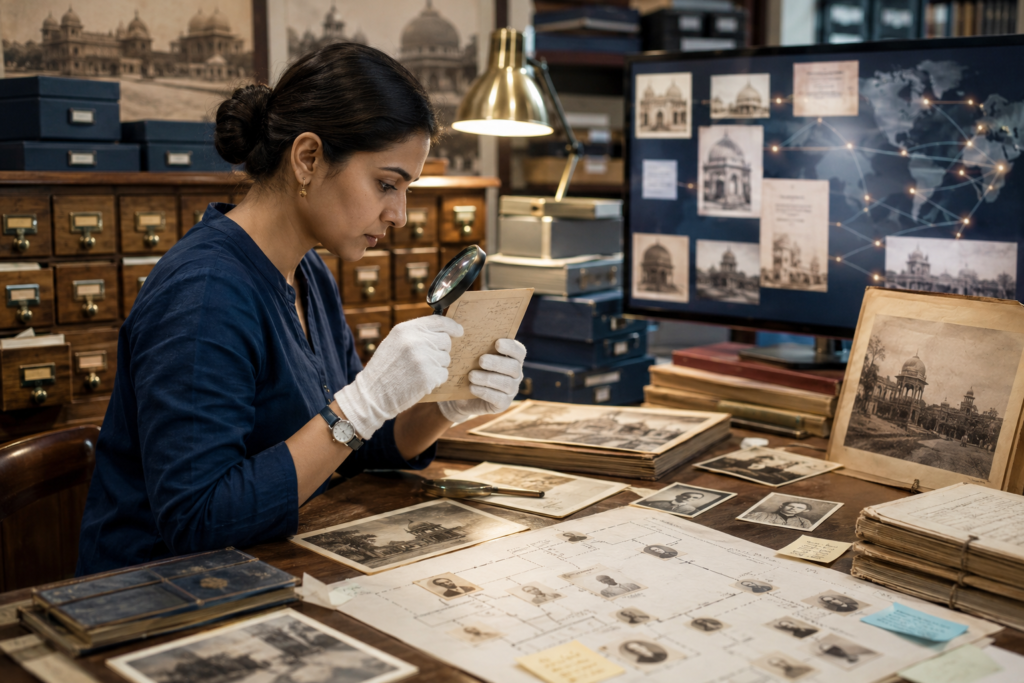
A box in a local archive contains a striking photograph of a public demonstration from the 1970s. The reverse bears only a faded studio mark. The newspaper that once used the image has closed, the photographer’s name is absent from surviving catalogues, and no collecting society can identify a successor. A documentary filmmaker wishes to reproduce it. The photograph may be historically important, the proposed use may be respectful, and payment may be available. Yet there is nobody from whom ordinary permission can be obtained. This is the practical dilemma of the orphan work.
Orphanhood does not describe the quality, age or cultural importance of a work. It describes a failure in the licensing market: copyright probably subsists, but the person authorised to license the intended use cannot be identified or located after reasonable investigation. The work may be a book, letter, photograph, painting, song, sound recording, film, broadcast, map, software file or born-digital object. It may sit in a public collection, a private attic or an online repository. The inability to find an owner creates what policy literature calls a clearance gridlock: socially useful access is deterred even though the absent owner receives neither bargaining opportunity nor royalty.
Indian law does not leave the problem wholly unanswered. Section 31A of the Copyright Act, 1957 permits compulsory licensing in certain unpublished works, and in published or communicated works withheld from the public in India, when the author or owner cannot be found. However, the mechanism remains formal, court-centred and work-specific. Its fit with mass digitisation, layered audiovisual rights and computational use is therefore uncertain. This article explains the lawful routes available now and develops a reform model that joins access with diligent search, public notice, attribution, escrow and meaningful remedies for a returning owner.
2. What Counts as an Orphan Work?
2.1 The core definition
A useful working definition has three elements. First, the material must contain copyright-protected expression; facts, ideas, methods and materials already in the public domain do not require an orphan-works solution. Secondly, one or more exclusive rights needed for the proposed act must still subsist. Thirdly, the relevant owner cannot be identified or located after a search proportionate to the work, proposed use and available information. This final element distinguishes a genuine orphan problem from a user who merely finds clearance inconvenient or expensive.
The official Indian copyright guidance explains that copyright ordinarily arises automatically rather than through mandatory registration. See the Copyright Office’s basic guidance and frequently asked questions. That principle serves creators, but it also means that no comprehensive ownership register exists. Contracts, inheritance, corporate mergers and assignments can separate the present owner from the name printed on a work. Even registration, where it exists, is evidentiary rather than a complete chain-of-title solution.
2.2 True, apparent and partial orphans
A true orphan is one for which the relevant owner remains unlocatable despite an adequate search. An apparent orphan only looks unowned because the user has not yet checked an obvious lead—for example, the publisher’s successor, a film producer’s corporate records or an author’s estate. A work may also be only partially orphaned. A documentary clip can contain separate rights in the screenplay, performance, background music, sound recording and film. Locating the producer does not necessarily clear the embedded song; locating the lyricist does not necessarily clear the recording. The proposed user must map the particular act and each right it engages.
Orphanhood can also change over time. An owner may reappear after a collection is catalogued online; an heir may discover probate records; or a rights-management database may connect a pseudonym to a legal identity. A responsible scheme must therefore record the search, provide continuing notice, and specify what happens to an existing licence when the owner returns.
2.3 Orphan work is not the same as public domain
| The decisive distinctionPublic domain means that the relevant exclusive right has expired or does not protect the material. Orphan work means that a right may still subsist, but the owner cannot presently be found. The absence of a contact address is not the absence of copyright. |
Before treating a work as orphaned, the user should calculate the term and identify the protected subject matter. The Copyright Act, 1957 contains different term rules for literary, dramatic, musical and artistic works; photographs; films; sound recordings; government works; and works of public undertakings or international organisations. Anonymous and pseudonymous works require particular care because later disclosure of identity may affect the calculation. If the term has expired, the work is not an orphan—it is simply free from the expired economic right, although authenticity, privacy, confidentiality, cultural sensitivity and other laws may still matter.
3. Why Owner Absence Does Not Authorise Use
3.1 Exclusive rights and infringement
Section 14 defines copyright as a bundle of exclusive acts that varies by category of work. It includes, among other matters, reproduction, issuing copies, public communication, adaptation and translation. Section 51 identifies circumstances in which unauthorised exercise of those rights infringes copyright. Neither provision asks whether the defendant could find the owner. Good-faith search may influence the equities, the remedy or a licensing decision, but it is not a free-standing defence to infringement.
The practical consequences are significant. Under Section 55, the owner may seek injunctions, damages, accounts and other civil relief. The statutory proviso dealing with an innocent defendant can limit monetary relief where the defendant was unaware and had no reasonable ground for believing that copyright subsisted, but an orphan-work user often proceeds precisely because copyright may subsist. That is different from honestly believing that the work is out of copyright. Section 57 also preserves the author’s special rights against false attribution and prejudicial distortion in the circumstances stated there. An absent economic owner does not erase the author’s reputational interest.
3.2 Section 52 exceptions remain purpose-specific
Section 52 excludes defined acts from infringement, including forms of fair dealing for specified purposes and targeted uses by educational, judicial, library and accessibility institutions. These exceptions apply whether the owner is easy or impossible to find. But owner absence cannot enlarge them. A critic may quote what is reasonably necessary for criticism; a court may reproduce material for a judicial proceeding; a qualifying library may rely on the provision applicable to its activity. A commercial publisher cannot convert an unrelated reproduction into fair dealing merely by showing unanswered emails.
This separation matters because diligent search and statutory purpose answer different questions. Search asks whether ordinary licensing is possible. Section 52 asks whether Parliament has already authorised the particular act without a licence. A user should therefore analyse the exception first. If every element is met, orphan status may be irrelevant. If the exception does not apply, a failed search points toward Section 31A or non-use—not unilateral publication.
3.3 Ideas, facts and protected expression
The Supreme Court’s decision in R.G. Anand v Deluxe Films remains fundamental to the idea–expression boundary. Copyright protects the form in which an idea is expressed, not the bare idea, subject matter or theme. Thus, a historian may use facts learned from an untraceable memoir and write a new account without reproducing its protected expression. Conversely, scanning the memoir, reproducing its photographs or lifting distinctive passages invokes rights that the mere use of historical facts does not.
4. India’s Statutory Answer: Section 31A
4.1 When the provision can be invoked
Section 31A addresses two connected situations. It covers an unpublished work and a work that has been published or communicated to the public but is withheld from the public in India. The statutory trigger is satisfied where the author is dead, unknown or cannot be traced, or where the copyright owner cannot be found. A person may then apply for a licence to publish the work or a translation in a language specified in the application. Because these words define both subject matter and authorised act, Section 31A should not be treated as a general permit for every use of every unlocatable work.
The applicant should state clearly why the contemplated act falls within “publish” or the requested translation authority, and should identify the Indian withholding element where relevant. Questions become harder for streaming, public exhibition, dataset ingestion or mass preservation where the act may not resemble conventional publication. A careful applicant should avoid assuming that a licence to publish silently covers every technologically convenient exploitation.
4.2 Notice, Form III and documented search
Before applying, the person must advertise the proposal in one issue of an English daily newspaper having circulation in the major part of India. If the application concerns a translation, notice must also appear in one issue of a daily newspaper in that language. The application is made in the prescribed form with the advertisement and fee. Rule 11 of the Copyright Rules, 2013 specifies Form III and ordinarily requires a separate application for each work and each language of translation.
Form III is important because it turns “the owner cannot be found” into an evidentiary claim. It asks for the facts establishing diligent search, the public notice issued, and attempts to contact the publisher where one is known. A defensible search will normally preserve dated screenshots, registry results, correspondence, returned mail, catalogue records, corporate-successor research, probate inquiries, collecting-society responses and the reasoning used to close a lead. The relevant sources differ by work: ISBN and publisher records for books; credits, cue sheets and industry databases for film or music; inscriptions, studio marks and acquisition files for photographs; and repository metadata or domain records for born-digital works.
4.3 Inquiry, terms, royalty and the returning owner
The Commercial Court conducts such inquiry as may be prescribed and may direct the Registrar of Copyrights to grant the licence. It determines the royalty and other conditions. The licence is therefore neither automatic nor self-assessed. The applicant should present the proposed edition, territory, language, duration, price, circulation, digital availability, attribution method and preservation measures, because those facts allow proportionate terms to be fashioned.
The statute also anticipates reappearance. The Registrar may direct that royalty be deposited in the public account of India or another specified account so that the copyright owner or heirs may claim it at any time. Escrow avoids a windfall to the user, but money alone does not solve every concern. A licence should also require attribution where a name is known, provenance disclosure where it is not, preservation of integrity, clear contact information for claims, and a procedure for correction or future editions.
4.4 The tribunal reform and an administrative mismatch
The Tribunals Reforms Act, 2021 amendment to Section 31A replaced the Appellate Board with the Commercial Court for this function. The current statutory text must therefore govern the forum. Some publicly accessible procedural material retains older institutional terminology, a mismatch that can confuse a first-time applicant. The Copyright Office should publish a consolidated, current practice note identifying the competent court, filing pathway, expected search evidence, online notice method and treatment of digital uses.
4.5 The special national-interest route
Section 31A also contains a distinct route where publication of an unpublished work is considered desirable in the national interest and the author is dead. If the Central Government requires the heirs, executors or legal representatives to publish the work within a specified period and they do not comply, the Commercial Court may direct a licence on an application. This is not a general public-interest override. It is a structured mechanism with governmental initiation and statutory conditions, appropriately reserved for works whose publication has genuine national significance.
4.6 Strengths and limitations
Section 31A has four major strengths: it preserves judicial scrutiny, creates public notice, enables payment, and allows an owner or heir to claim royalty later. It therefore offers a more principled answer than “use now and apologise later.” Yet its limitations are equally visible. A newspaper advertisement may be less discoverable than a persistent online record; separate applications can make large collections uneconomic; the provision’s publication-focused language leaves uncertainty for modern forms of access; and a Commercial Court process may be disproportionate for low-value, non-commercial preservation.
The statutory mechanism is consequently most workable for an identifiable work and a defined publication project. It is poorly scaled to a museum containing tens of thousands of photographs, a broadcaster’s unindexed footage, or a library digitising deteriorating ephemera. Reform should preserve the safeguards but vary the pathway according to the volume, risk and purpose of use.
5. Judicial Principles That Shape the Analysis
5.1 Copyright as a balance, not an absolute
In Entertainment Network (India) Ltd v Super Cassette Industries Ltd, the Supreme Court considered compulsory licensing in the broadcasting context. Although the case arose under a different licensing provision, its broader lesson is relevant: copyright law protects the owner’s reward while also recognising public access, and compulsory licensing must operate through the procedure, evidence and terms chosen by the statute. That reasoning supports a genuine orphan-works licence but not an informal private declaration that a search was “good enough.”
5.2 Special licensing provisions cannot be rewritten by convenience
The Bombay High Court in Tips Industries Ltd v Wynk Music Ltd read the statutory-licence provision before it in light of its language and context, rejecting an attempt to extend it to an on-demand streaming model beyond the section’s scope. For orphan works, the caution is direct. A Section 31A licence should match the authorised act and conditions. Deposit of money, publication of a notice or technological novelty does not independently generate a licence.
5.3 Public interest is not a free-standing fair-dealing purpose
In Super Cassettes Industries Ltd v Hamar Television Network Pvt Ltd, the Delhi High Court emphasised that fair dealing must be connected to a purpose recognised by the statute and assessed through factors such as purpose, amount and market effect. The public value of an archive or documentary may strongly inform fairness where a Section 52 purpose applies, but it cannot substitute for that purpose. This keeps the orphan-work question analytically honest.
5.4 A recent digital-use decision
The Delhi High Court’s interim decision of 24 July 2026 in ANI Media Pvt Ltd v OpenAI OPCO LLC refused interim injunctive relief on the record before it and treated Section 52 as part of the statutory balance between owner and user interests. The Court’s prima facie treatment of model training was tied to the asserted purpose, transformation, market evidence and safeguards; it also distinguished training from output that substantially reproduces or regurgitates protected material.
The ruling should not be converted into a general orphan-works exemption. The inability to locate an owner is still not a statutory fair-dealing purpose. The case instead illustrates that a qualifying Section 52 use may be lawful regardless of owner location, while non-qualifying reproduction still requires authority.
6. Four Practical Illustrations
Illustration 1: The unnamed archival photograph
A city museum holds a 1968 photograph acquired with a donated collection. It wants to place a high-resolution copy in a paid exhibition catalogue. The museum should first examine the physical print, donor file, studio mark, newspaper archives, photographer directories, registration records where relevant, and known estates. It should calculate the term rather than infer public-domain status from the monochrome image. If protected expression remains and no Section 52 exception covers the catalogue reproduction, the museum should seek permission or assess Section 31A. A low-resolution access copy used for a different statutory or evidentiary purpose requires a separate analysis.
If licensed, the catalogue can state that the creator or owner was unlocated after a recorded search, invite claims, identify the image without inventing authorship, and preserve the royalty. Cropping away a photographer’s mark or colourising the image may create integrity and attribution concerns that owner absence does not neutralise.
Illustration 2: The unpublished manuscript
A university archive discovers the unpublished prison diary of a deceased freedom activist. The institution knows the author’s identity but cannot locate heirs. Because the manuscript has not been published, Section 31A is directly relevant. The proposed scholarly edition, search for heirs, newspaper notice, editorial method, proposed royalty, attribution and handling of sensitive personal information should be placed before the competent forum. If publication is genuinely considered desirable in the national interest, the special statutory route may become relevant, but the institution cannot proclaim that status for itself.
Illustration 3: The partially orphaned documentary clip
A documentary producer locates the owner of a 1980 newsreel but cannot identify the composer of music audible in the clip. The clip is only partially cleared. The producer should determine whether the sound recording, composition and film are separate protected works; whether the music is incidental or substantial; whether editing, replacement or reliance on a specific exception is possible; and whether the intended platform and territory are covered. A licence from the film owner does not automatically cure an orphaned music right. Form III’s work-specific structure also warns against collapsing all embedded content into one clearance event.
Illustration 4: Mass digitisation and artificial intelligence
A research consortium proposes to scan two million out-of-commerce pages, including works with incomplete metadata, to create a searchable corpus and train a language model. At this scale, individual newspaper notices and Commercial Court applications are unrealistic. The consortium must still separate acts: preservation copy, optical character recognition, search indexing, computational analysis, model training and public display of outputs may engage different rights and exceptions. It should document lawful access, minimise retained expressive material, apply output safeguards, honour opt-outs where feasible and assess Section 52 for each purpose. “The owners are hard to find” is not a substitute for that analysis.
This illustration exposes the policy gap. India needs a collective or registry-based route for high-volume, socially valuable uses, with transparent search standards and owner remedies, rather than forcing institutions to choose between paralysis and untested legal risk.
7. Comparative Models
Comparative law does not offer one universal answer. It offers design choices: who may use an orphan work, for what purpose, after what search, in which territory, for how long, with what payment, and subject to which rights when an owner returns.
| Jurisdiction | Mechanism | Core design | Returning owner |
|---|---|---|---|
| India | Section 31A; Commercial Court direction to Registrar | Work-specific publication or translation; notice, inquiry and royalty | Owner or heirs may claim deposited royalty |
| European Union | Directive 2012/28/EU and EUIPO database | Specified cultural/educational bodies; diligent search; public-interest, non-commercial uses; mutual recognition | Orphan status can end; fair compensation is available under national law |
| United Kingdom | IPO licensing scheme | Commercial or non-commercial; non-exclusive, UK-only licence; diligent search; maximum seven years | Public register and licence fee held for owner; no new licence once owner is found |
| Canada | Copyright Board under section 77 | Published works and specified subject matter; reasonable efforts; non-exclusive licence | Owner may claim fixed royalties within five years after licence expiry |
| United States | No general enacted orphan-works licence | Copyright Office has recommended diligent-search/remedy limits and separate mass-digitisation approaches | Ordinary law applies absent a specific defence or licence |
7.1 European Union: institutional access and mutual recognition
The EU Orphan Works Directive 2012/28/EU is tailored to publicly accessible libraries, educational establishments, museums, archives, film or audio heritage institutions and public-service broadcasters. After a diligent search, qualifying bodies may use covered orphan works for public-interest missions under defined, predominantly non-commercial conditions. Information is recorded in the EUIPO Orphan Works Database, and orphan status recognised in one Member State receives cross-border recognition. The model’s strength is coordinated cultural access; its limitation is its restricted beneficiaries and uses.
7.2 United Kingdom: a broad transactional licence
The United Kingdom Intellectual Property Office scheme permits commercial and non-commercial uses after a diligent search. Licences are non-exclusive, limited to the United Kingdom and ordinarily last no more than seven years. The application and licensed use appear on a public register, and the fee is retained for a returning owner. The IPO also publishes diligent-search guidance under the Copyright and Rights in Performances (Licensing of Orphan Works) Regulations 2014. This approach is more flexible than an institution-only exception but requires transaction-by-transaction administration.
7.3 Canada: Board-set terms and a claims window
Section 77 of Canada’s Copyright Act authorises the Copyright Board of Canada to issue a non-exclusive licence where a person has made reasonable efforts to locate an owner who cannot be found. The provision covers published works and specified fixed or published subject matter, and the Board fixes the terms. A returning owner may recover the royalties within five years after the licence expires. The administrative specialist model offers useful proportionality for routine applications.
7.4 United States: proposed remedy limitation rather than a licence
The United States has no general enacted orphan-works licensing scheme. The U.S. Copyright Office’s Orphan Works materials and reports identify the same gridlock and have recommended measures centred on a reasonably diligent search, attribution, limitations on remedies and a distinct approach to mass digitisation. The U.S. debate highlights a critical policy choice: government may grant permission in advance, limit consequences after a proven search, or combine both approaches for different risk classes.

8. A Reform Blueprint for India
India should retain Section 31A as the high-scrutiny route for important publication disputes while adding a modern, tiered mechanism. The objective is not to weaken copyright. It is to replace unproductive uncertainty with verifiable conduct, owner visibility and compensation.
- A unified online register. Every claim should record the work, known creator information, search sources, proposed use, applicant contact, licence terms and status. Records should be searchable by text, identifier and image where feasible. Newspaper notice may supplement—not substitute for—persistent digital notice.
- Risk-based diligent-search standards. Rules should provide sector-specific checklists for books, photographs, audiovisual works, music, unpublished papers and born-digital material. The standard should remain proportionate: a commercial nationwide campaign warrants more effort than low-resolution access to a fragile local pamphlet.
- Two licensing tracks. A simplified Copyright Office or specialist administrative route should handle low-risk, non-exclusive and non-commercial uses. The Commercial Court should remain available for contested, high-value, integrity-sensitive or unusually broad uses.
- Collection-level solutions. Archives, libraries and museums should be able to seek an approved project or extended collective licence after representative searches and safeguards, instead of filing thousands of identical applications. Sampling, metadata enrichment and continuing claims portals can make mass projects auditable.
- Remedy limitation for good-faith users. Where a user proves a qualifying search, public notice, attribution and compliance, injunctions and monetary relief should be proportionate. A returning owner should obtain reasonable compensation and prospective control, but an already distributed public-interest project should not automatically be destroyed.
- Royalty escrow with transparent valuation. Commercial uses should ordinarily pay a market-informed fee. Low-value public-interest projects may justify nominal or deferred sums. Unclaimed funds should remain traceable, with any eventual public allocation limited by clear legislation and audit.
- Moral rights and sensitive collections. The regime should require attribution where known, honest orphan-status labelling, correction mechanisms and respect for integrity. Indigenous, community, sacred, private or culturally sensitive material requires consultation and ethical safeguards beyond economic copyright clearance.
- Technology-neutral drafting. The authorised acts should be stated expressly—preservation, reproduction, publication, communication, indexing, computational analysis or another use—so that a licence is neither obsolete on arrival nor broader than justified.
9. A Practical Checklist Before Using a Suspected Orphan Work
- Define the exact proposed acts, formats, territory, audience, duration and commercial character. “Use” is too vague for rights analysis.
- Identify every protected layer and likely initial owner. Separate a film from its music, a book from its photographs, and a website from user-uploaded content.
- Check whether copyright subsists and calculate the relevant term. Record the source and assumptions; do not equate age with public-domain status.
- Test the intended act against Section 52 and any other specific statutory permission. Document each required element rather than relying on general public benefit.
- Conduct a work-appropriate diligent search: examine the object and metadata; trace publishers and corporate successors; search collecting societies, catalogues, registries, probate and professional records; contact plausible leads.
- Preserve an evidence file containing dates, queries, screenshots, correspondence, returned notices and reasons why each lead was inconclusive.
- If ordinary permission is unavailable, assess whether Section 31A covers the work and intended publication or translation; follow Rule 11, Form III, advertisement and filing requirements.
- Design attribution, provenance, integrity, privacy and cultural-sensitivity safeguards. Use only the amount and quality necessary for the licensed or excepted purpose.
- Publish a durable contact point for owners, reserve the royalty or budget for a claim, and plan what will happen to future distribution if an owner reappears.
- Recheck orphan status before a new edition, platform, territory or materially different use. A prior search is not a permanent certificate of ownerlessness.
| Bottom line for usersA diligent search proves responsibility; it does not itself supply permission. Lawful use must rest on the public domain, a statutory exception, a valid licence—including a Section 31A licence where applicable—or another recognised legal basis. |
10. Conclusion
Orphan works reveal a structural weakness in copyright administration. The law may confer enforceable rights for decades while ownership information decays through lost records, dissolved companies, pseudonyms, inheritance and layered production. When clearance becomes impossible, creators receive no payment, users face liability, and the public may lose access to cultural memory. Treating the work as free would disregard the owner; treating it as permanently unusable would disregard copyright’s wider social purpose.
India’s Section 31A provides the correct normative foundation: search, notice, institutional scrutiny, tailored permission, royalty and a claim for the owner who returns. Its court-centred and publication-focused design, however, needs a digital-era companion. A searchable registry, risk-based search rules, proportionate administrative licensing, collection-level solutions and limited remedies for compliant users would make lawful access realistic without dissolving ownership.
The practical rule remains simple. An unlocatable owner does not create unowned expression. The responsible user must identify the right, search credibly, test statutory exceptions, obtain the appropriate licence where necessary, preserve attribution and make reappearance meaningful. Properly designed, orphan-works law does not choose between creators and access; it converts an unreachable transaction into an accountable one.