This article is written by OLUWABUKOLA BENEDICTA ONI, UNIVERSITY OF IBADAN, LAW, 500 LEVEL during his internship at LeDroit India
ABSTRACT
In the field of intellectual property, software is mainly protected under copyright as a literary work protecting computer software code. However, other intellectual property rights can come to play which consist of patents for novel processes protecting the inventive functionality, methods or processes within the software. Also, in the development of the software, confidential information about it such as source code, algorithms, or business logic can be protected under trade secret due to the competitive edge it gives the owner over other competitors in the same industry. Most work created has a name to specifically identify the work and its source, so also software can be protected under trademark to protect brand identity comprising software’s name, logo or slogan to distinguish it from that of competitors.
GNU General Public licence is an open source software that provides the avenue for free access to creativity with a legal obligation for derivative works to remain free to use. In contrast, there is a proprietary software is a closed source software which is protected under intellectual property which grants restricted access to such work. The aim of this paper is to engage in a comparative analysis both types of source codes with the intention of depicting that both are relevant as our everyday tool.
Keywords: Open source software; GNU General Public License; Proprietary Software License; Copyleft; Software Licensing; Intellectual Property Rights.
INTRODUCTION
Software is a set of instructions, data or programs used to operate computers and execute specific tasks. Software is an everyday tool that helps in making works easier and faster, such as word processor software, graphics software, web browsers and more. Considering the aid and leverage these examples of software gives the creator, they are mostly licensed for limited use of the software by users. Hence, a software licence is a document that provides legal binding guidelines for the use and distribution of software. Generally, open source software is a code freely available for anyone to view, modify, and distribute.
The analysis of the subject, GPL and proprietary licensing is crucial today because of the continuous development in digital economy. Both can be used commercially however; the latter derive more income through licensing and control over such work. Likewise, they offer the platform for innovation leading to constant development and better options to work with. Despite these incentives, this is the pressing issue of access versus control in both. The restraint of payment in proprietary licensing is an obstacle to access unlike GPL.
OPEN SOURCE SOFTWARE AND THE GPL
The open source movement originated from the early practices of software development between 1950s and 1960s, when computer software was not viewed as an independent commercial product but as an accessory to computer hardware. The source codes were used freely by programmers in the universities, research institutions, and corporate laboratories. The major aim at that time was to advance computing technologies rather than making profit. This thinking changed in the late 1970s and early 1980s as software began to earn commercial value. Copyright laws and restrictive licensing agreements were leveraged upon by software developers and companies which gave birth to proprietary software. Not long, in 1983, Richard Stallman initiated the GNU Project with the intention of creating a free and open operating system compatible with Unix. He also developed the concept of ‘copyleft’ to legally protect these freedoms.
This concept was formalized in the GNU General Public License (GPL) in 1989. This became a landmark legal instrument in the open source movement by imposing an obligation on developers to distribute derivatives works under the same licence terms. In 1998, the term ‘open source’ was adopted as a strategic rebranding of the free software movement to appeal more directly to businesses and policymakers. Today, open source software plays a central role in the global digital ecosystem, underpinning technologies such as operating systems, cloud computing platforms, web services, and mobile applications.
‘Open source’ refers to the community approach to creating intellectual property, such as software, through open collaboration, inclusiveness, transparency and frequent public update. Common examples include WordPress, Linux, MySQL, Mozilla Firefox and others. This type of software is used by three types of users; they are end users, developers, and businesses. End users use it for free for the creation of operating systems and web browsers such as Linux and Firefox respectively. Both developers and businesses use it to reduce cost, work faster and achieve better results.
Significantly, it has been useful for customization and flexibility, cost reduction, faster innovation, transparency, talent attraction and more. Open source provides a learning opportunity for students and developers to study real-world code. This allows for critical thinking and problem-solving skills resulting to consistent development and varieties of great works derived from the source code. Also, trust is built on the open access to inspect the code without being forced to trust the vendor.
A landmark case on the legal enforceability of open source licence is Jacobsen v. Katzer where the court held that the conditions in an open source licence are enforceable copyright conditions, not mere contractual promises.
Image Credit: Two Ears and One Mouth
One of the primary roles of Free Software Foundation (FSF) by Richard Stallman is the promotion of software freedom. It also paly the role of the development and maintenance of free software liccences most notably the GNU General Public License (GPL).
Although the term free software and open source software are often used interchangeably, they have distinct philosophies concerning software development, licensing, and user rights. Free software is a concept is a concept developed and promoted by the Free Software Foundation which emphasizes user freedom as a moral and ethical license. Open source software, on the other hand, focuses more on the practical and technical benefits of making source code openly available.
GNU General Public License (GPL) is a commonly used free software license providing to users the open access to run, study, share, and modify software through copyleft terms. In essence, any derivative work through the GPL will not become proprietary.
GPL operates through six main features, one of such is the principle of copyleft which uses copyright law to prevent derivative works originating from a GPL from being turned proprietary (closed source) software, thereby remaining open to use by the public. Other features are source code availability, permission of commercial use, patent protection, no warranty, community and collaboration. Hence, GPL offers the right to use, study, and modify while, on the other hands, imposing the obligation for such derivative work to remain free and open.
GPL is legally binding under copyright licence and not just a mere permission. Software is protected a s a literary work under copyright law with the exclusive right to reproduce the software, modify it, distribute copies, and authorize others to do the same. Hence, the licence conditions, such as: making source code available, licensing derivative works under the GPL, and preserving copyright notices. Additionally, copyleft is enforced using copyright law and recognized by courts and legal systems.
BusyBox GPL Enforcement Cases which involves various actions brought by the software freedom conversancy where the court held that companies distributing GPL-licensed software without complying with the source code disclosure requirements were found to be in violation of copyright law. In the case of Artifex Software Inc. v. Hancom Inc.
PROPRIETARY SOFTWARE LICENCE
Proprietary software licence is a legal document used by software developers and companies to assert ownership over their software and control how it is used, distributed, and monetized. The primary goal is to protect its confidentiality and maintain commercial value of the software.
Common features of proprietary software license include ownership and control by the developer or creator. This grants exclusive use of such work against the whole world. Also, exclusive use give rise to restricted use through specific terms involving monetization through sale and licence. This is a source of income for the developer and a form of incentive for the creation of more and better work. Legal protection such as End User Licence Agreement (EULA) is also made available in order to control the use of the software. Restriction placed on proprietary software license are usage rights, copying, transferability, distribution, modification, reverse engineering and more.
Proprietary licence is legally protected through copyright law and contract (End User Licence Agreement). These two must be in place for the proper protection and legal enforceability of legal rights. Companies prefer proprietary licence because of the revenue it generates, recognition it gives, and control over licence users.
In the case of Apple Computer Inc. v Franklin Computer Corp it was held tht computer programs are protected as literary works under copyright law. Also, in ProCD Inc. v Zeidenberg, proprietary software licenses including end user licence agreements have been upheld as enforceable contractual instruments.
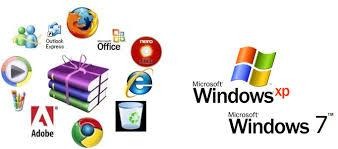
Image Credit: bap-software.net
Examples of these type of software are Microsoft, iTunes, Adobe photoshop, MacOS. This leads to the different types of proprietary license. Perpetual license involves indefinite use of such software after a one-time payment to acquire the rights to copy, distribute and more operations such as Microsoft Windows, CorelDraw among others. A common type is subscription license which requires periodical payments whether monthly, annually or as stated in the license agreement to obtain access or right of use. Some of which include Microsoft 365, Zoom and more. Other types are volume license, name user license and floating license.
COMPARISON BETWEEN GPL, AND PROPRIETARY LICENSE
In terms of nature, GNU General Public Licence is an open source licence which simply means that there is free access to copy, modify, and distribute. In contrast, proprietary licence grants access through license and with restrictions on modification, and redistribution. Hence, the source code of GPL is freely available and that of proprietary license is not disclosed.
Additionally, GPL-licensed software is characterized by shared control, as the copyright owner permits public participation in development subject to licence conditions. However, proprietary licences, retains ownership and control exclusively in the hands of the software developer or vendor, limiting user.
In the aspect of cost, GPL permits commercial use of the software, it restricts the conversion of derivative works into proprietary products through the copyleft principle. Proprietary licences, on the other hand, are designed primarily for commercial exploitation and allows vendors to monetise software through sales, subscriptions, or licensing fees.
GPL imposes the license obligation that derivative works must also be license under copyleft principle including source code disclosure and licence continuity. For proprietary licence, it is grounded on copyright and contract law to enforce restrictive terms governing use, distribution, and modification. Common examples of GPL are Linux, GNU utilities, WordPress among others while proprietary software licenses are Microsoft Windows, Microsoft 365, Adobe Creative Cloud and more.
ADVANTAGES AND DISADVANTAGES
GNU General Public License (GPL)
GPL has a major advantage of freedom of use, study, modify, and share. This provides the opportunity to access the source code and modify or adapt based on specific need. It also encourages collaboration which in the long run will give rise to innovation and rapid development. It also gives rise to cost effectiveness which reduce cost for individuals, businesses, and government. Essentially, it prevents monopolization and finally, it is easier to detect vulnerability and malicious code helping to ensure transparency and security.
In the negative aspect of GPL, a major issue is the principle of copyleft which imposes a legal obligation that all derivative works must remain free which can discourage commercial use. Others are lack of guaranteed support, rigid compliance rule and limited proprietary integration.
Proprietary Software License
An important advantage is the exclusivity it offers to the owner as well as control ensuring consistency and intellectual property protection. With exclusivity guaranteed, vendors offer customer support, updates, and security patches. Also, it is suitable for businesses that desires to monetize that software. Proprietary software license grants user friendly designs and clear accountability.
On the other hand, there is the risk of high cost arising from licensing fees, subscription costs, upgrade fees. A pressing issue is that users cannot inspect and modify the source code leading to lack of transparency. Hence, users tend to be dependent of the provider making switching difficult or costly. Likewise, restricted usage rights such as limited copying, sharing, and modification.
CONCLUSION
This paper has empirically proved that the distinction between the licensing of open source software in the GNU General Public License (GPL) and the licensing of proprietary software is by no means of a technical nature, but is deeply rooted in the diverging philosophies of intellectual property. Although both concepts of proprietary and open source software licensing are fundamentally grounded in the copyright, they make use of the copyright in a profoundly different manner to attain two utterly different goals.
The GPL is a deliberate application of copyright law that ensures software freedom via the copyleft license, which guarantees that software and its works are openly accessible, modifiable, and distributable. The legal efficacy, as has been confirmed through court decisions like Jacobsen vs. Katzer and BusyBox, has also made it imperative that open source software is more than a casual concession but a legal document that carries specific obligations. It is, through its facilitation of collaboration, opacity, and fast-paced innovation, that has made the GPL a backbone of the digital age.
On the other hand, the proprietary software licenses focus heavily on exclusivity, confidentiality, and commerciality. It has been possible for developers to capitalize on their creations, control the quality, as well as offer defined support and accountability, owing to the restrictive nature of the licenses coupled with the principles of copyright laws, as seen in the cases of Apple Computer Inc. v. Franklin Computer Corp. and ProCD Inc. v. Zeidenberg.
Ultimately, it can be said that both of these licensing schemes are not superior to each other in a relative sense. Being dependent on what could be the objectives of developers, organizations, governments, as well as consumers, these two schemes can be put to more effective use. The GPL can be highly effective in a context where openness, shared innovation, as well as collective benefits, become paramount, whereas proprietary licenses can play a significant part in circumstances where viability, superiority, as well as centralized management, are given prime importance. In a global economy slowly transitioning to a more digital world, it can be said that a blend of both approaches to IP is a result of a sense of balance obtained in IP laws.