This article is written by Shreya Pandey of M.K.E.S College of Law, BA, LLB, 4th Year during her internship at LeDroit India
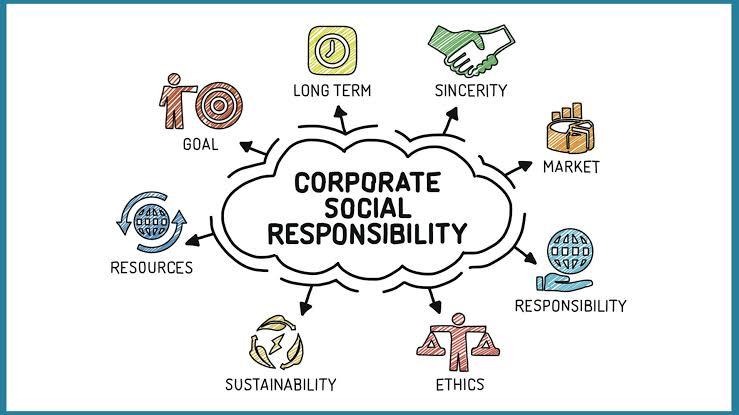
Scope of article:
- Introduction: The Legal Formalization of Corporate Responsibility
- Corporate Governance and its principles
- CSR (corporate social responsibility)
- Mandatory CSR and Regulatory Compliance: Global Frameworks
- Legal Liability and Consequences of CSR/ESG Failure
- Conclusion.
Keywords: Corporate Governance, CSR, Mandatory CSR, Global Framework, Investor Scrutiny (ESG), Legal liability.
- Introduction: The Legal Formalization of Corporate Responsibility
The development of Corporate Social Responsibility represents a sea-change in corporate law worldwide. What was previously perceived as peripheral, solely voluntary, and ethical has in recent times increasingly turned regulated and mandatory for advanced corporate governance. This dramatic shift stems from growing demands by consumers, increased regulatory pressure, and a general expectation of sustainability and ethics on the part of society at large. For all practical purposes, the current parameters of CSR are defined by what is called ESG criteria, now seen not just as ethical imperatives but also as important parts of legal risk management and ensuring long-term viability.
While early CSR activities often went beyond basic legal compliance, characterized by their voluntary nature, the current regulatory trend shows a determined drive toward binding national laws. Governments are applying a ‘smart mix’ of binding and voluntary measures aimed at making business respect basic human rights and environmental protection standards. The dynamic here is unmistakable: societal pressure is turned into reputational risk, which is then magnified through major investors – such as the more than 5,300 signatories to the UN Principles for Responsible Investment, with combined assets under management of over $120 trillion. When that much institutional money deploys ESG metrics in investment decisions, non-compliance stops being an ethical lapse and becomes a material financial risk, which generates an imperative legal and regulatory response to align market expectations and contain systemic risk.
- Corporate Governance and its principles.
The fundamentals of corporate governance are the set of principles by which a company should be directed and controlled to ensure that the conduct of the business is efficient, ethical, and responsible, taking into consideration the interests of all stakeholders concerned. Though models may differ, the core principles remain constant: Accountability, Transparency, Fairness, and Responsibility.
1. Accountability: It means that the board and management are accountable for their actions, decisions, and performance of the company to the shareholders and, in a broader sense, to other stakeholders.
Role clarity: Sharp division of roles and responsibilities between the board and management.
Performance Review: Establishing systems to monitor, evaluate, and hold management and the board itself responsible for performance against objectives.
Audit & Control: Implement strong internal control and risk management systems.
2 Transparency: means timely, accurate, and comprehensive disclosure of all material information on the company’s financial condition, performance, ownership, and governance.
Disclosure: This includes comprehensive financial statements, annual reports, and information about the governance practices and risk of the company.
Clarity – There should be clarity in the information provided to support informed decision-making by stakeholders.
Timeliness: Material information shall be disclosed to the market in a timely manner.
3. Equity (Fair Treatment): Fairness ensures that all shareholders, especially the minority and foreign shareholders, are accorded equal treatment. The principle further extends to the fair treatment of all stakeholders of the company, including employees, creditors, suppliers, and the community.
Principle of Equal Rights: Shareholders of the same class must be treated equally and have the possibility to exercise their rights and gain effective redress in case of violations.
Conflict of Interest: Establishment of policies to avoid conflicts of interest and abusive self-dealing by insiders.
4. Responsibility (Oversight & Ethics):
Responsibility: The responsibility of the board and management is to act in the best interest of the company and its stakeholders, ensuring that the company complies with all laws, regulations, and ethical standards.
Strategic Guidance: The board is responsible for setting the company’s strategic direction and overseeing its implementation.
Stakeholder Consideration- Recognizing stakeholders’ rights through the provisions of law or by mutual agreements, and fostering cooperation to create wealth, jobs, as well as sustainable enterprises.
Ethics & Social Responsibility: Promote high ethical standards and corporate social responsibility practices.
Additional Key Principles In addition to the four pillars, further areas are emphasized within several effective corporate governance frameworks, including that of the OECD: Independence: It should contain an adequate number of independent directors who are capable of objectivity in arriving at decisions with no undue influence by management or major shareholders. Risk Management: Establishing processes to identify, assess, and manage key risks that could affect the company’s performance or its reputation. Shareholders’ Rights: Safeguarding the rights of shareholders in decision-making participation, voting, election, and the right to share in corporate profits.
- CSR (corporate social responsibility)
The government perceives CSR as the business contribution to the nation’s sustainable development goals. Essentially, it is about how business takes into account the economic, social and environmental impact of the way in which it operates. Perception of the government about CSR gained shape and form in the Companies Act, 2013, which mandates Companies to undertake Corporate Social Responsibility, as one of the Board Agenda. The importance of inclusive growth is widely recognized as an essential part of India’s quest for development.
It reiterates our firm commitment to include those sections of the society in the growth process, which had hitherto remained excluded from the mainstream of development. In line with this national endeavor, Corporate Social Responsibility (CSR) was conceived as an instrument for integrating social, environmental and human development concerns in the entire value chain of corporate business. Ministry of Corporate Affairs had issued ‘Voluntary Guidelines on Corporate Social Responsibility, 2009’ as a first step towards mainstreaming the concept of Business Responsibilities. This was further refined subsequently, as ‘National Voluntary Guidelines on Social, Environmental and Economic Responsibilities of Business, 2011’.
3.1) Why CSR Matters More Than Ever in Modern Business?
The Five Critical Drivers of Modern CSR
1. Consumer Demand and Shifting Values
Modern customers, especially Millennials and Generation Z, make purchase decisions based on a company’s values and what they stand for. Value-driven purchasing: Many customers actively seek out companies with exemplary ethical, social, and environmental performances and are often willing to pay a premium for their products.The Power of Boycotts: On the other hand, consumers are quick to penalize companies perceived as unethical or exploitative. Brand loyalty will break easily if a company’s actions run contradictory to their publicly stated values.
2. Investor Scrutiny (ESG)
ESG attributes have, in recent times, been pursued by the financial community as an integral component of investment analysis.
Risk Mitigation: Investors perceive strong CSR/ESG as indicative of a well-governed and future-oriented company with less risk of facing regulatory fines, litigation, and major public scandals.
Long-Term Value: Companies focusing on sustainability and good governance are seen to be better positioned for long-term growth and resilience, attracting sizeable pools of capital from so-called “impact investors.”
3. Talent Attraction and Retention
The modern workforce, specifically top talent, is seeking purpose in their careers.
Employee Alignment: Top performing employees look for organizations whose mission and values align with their own. CSR gives employees a sense of meaning and purpose beyond the paycheck.
Engagement and Productivity: Firms with strong, authentic CSR programs tend to have higher morale, employee engagement, and retention. Employees who feel proud of their employer turn into powerful brand ambassadors.
4. Radical Transparency and Social Media
Digital technology means that the entire supply chain and every action of a company are instantly exposed to the world.
Instant Accountability: Social media acts as an immediate public forum. One negative video or story about unethical labor, poor environmental practice, or misleading claims (“greenwashing”) can instantly cause a global reputational crisis.
Transparency is the first requirement for accountability: Corporations should communicate their CSR policies and performance in a proactive and transparent manner, showcasing not only their achievements but also the challenges they face in the process.
5. Managing Global Risk and Regulation Global challenges such as climate change, resource scarcity, and supply chain fragility have emerged as direct threats to business operations. Operational Resilience: Sustainable practices-like energy efficiency or responsible sourcing-can reduce the costs and risks a business face from the volatility in resource prices or from devastating climate disasters.
Proactive Compliance: Several countries, including India, are adopting more stringent laws, such as compulsory spending on CSR or banning the use of plastic. Companies that have proactive CSR strategies will be much better placed to comply with such laws and avoid penalties and, most importantly, have a greater say in the framing of the policy.
In a nutshell, CSR is no longer just about doing good; it is central to doing good business. It is a key strategy for managing reputation, securing investment and talent, and ensuring long-term financial.
- Mandatory CSR and Regulatory Compliance: Global Frameworks
The current global regulatory environment is marked by a significant shift in CSR from “soft law” standards, like the nonbinding guidance of the ISO 26000 standard on governance, human rights, and environment, to “hard law” requirements that create quantifiable, binding obligations.
Required Case Study: India’s Corporate Social Responsibility Law
India is considered the most definitive example of a mandatory CSR law. Section 135 of the Companies Act, 2013, lays out a singular statutory requirement whereby qualifying large companies, based on profit, net worth, or turnover threshold qualifications, spend at least 2% of their average net profits over the last three years on CSR activities.
The compliance mechanism in India has relied mainly on creating social norms around the 2% target, through social pressure and reputational effects rather than through immediate stringent government enforcement or penalties. Notwithstanding an initial set of problems with vague provisions and unspent funds, this has been a policy under which overall CSR expenditure has significantly increased.
Judicial clarity has been provided in cases such as Foseco India Ltd. v. Union of India (2014), where the Delhi High Court determined that CSR funds must be utilized for the benefit of the public interest and must not be appropriated for the personal advantage of directors or employees. This mandatory spending requirement moves beyond mere disclosure or due diligence, transforming CSR into a quantifiable, budgetary requirement subject to legal oversight, effectively legalizing a form of mandated corporate philanthropy.
Mandatory Case Study: EU Corporate Sustainability Due Diligence Directive (CSDDD)
The European Union’s regulatory landscape is setting the global benchmark for mandatory due diligence, mainly due to the Corporate Sustainability Due Diligence Directive, which entered into force in July 2024. The CSDDD is designed to build sustainable and responsible corporate behavior throughout operations and, most importantly, international value chains. The Directive places considerable burdens on the subject companies to proactively identify, prevent, and mitigate actual or potential adverse human rights and environmental impacts, linked not only with their operations but also with upstream and certain downstream value chain activities. This legislative act means embedding responsible business conduct into existing corporate policies and due diligence processes.
While the final text of the CSDDD was amended and did not include new, specific directors’ duties as initially proposed, the Directive still profoundly affects governance. The obligations imposed by the CSDDD are so wide-reaching that activist shareholders and NGOs can utilize violations of these mandates to accelerate change through litigation.
Existing national directors’ duties, such as the UK’s S. 172, are considered broad enough to accommodate ESG-related claims arising from failures to comply with CSDDD requirements. The CSDDD is a powerful example of hard law creating obligatory corporate liability that extends extra-territorially, thus requiring companies to create thorough legal risk management and detailed governance controls of their entire global supply chain, regardless of the geographic location of the subsidiary or supplier where the damage may occur.
- Legal Liability and Consequences of CSR/ESG Failure
The legal liability and consequences for Corporate Social Responsibility (CSR) and Environmental, Social, and Governance (ESG) failure in India are mainly governed by the Companies Act, 2013, and are generally financial penalties, though other legal and major reputational consequences exist.
- India’s legal framework for CSR is mandatory for spending (or mandatory for transferring unspent amounts), unlike most other countries which follow a “comply or explain” approach. Legal Liability for CSR Failure (Companies Act, 2013). The primary legal framework for CSR is Section 135 of the Companies Act, 2013, and the Companies (CSR Policy) Rules, 2014.
- Failure to comply mainly relates to the non-spending or non-transfer of mandated funds. Key Compliance Requirements Companies meeting prescribed financial thresholds (Net Worth of ₹500 Cr.5 or more, or Turnover of ₹1,000 Cr.6 or more, or Net Profit of ₹5 Cr.7 or more) must spend at least 2% of their average net profit of the three preceding financial years on CSR activities.
- Consequences for Failure to Spend/Transfer the penalty structure is primarily focused on failure to properly handle the unspent amount. Default Category transfer requirement penalty for Company (Whichever is Less) Penalty for Officer in default unspent Amount (Ongoing Project) Must be transferred to a special “Unspent Corporate Social Responsibility Account” within 30 days of the financial year end.
- Twice the amount required to be transferred OR ₹1 Crore.One-tenth of the amount required to be transferred OR ₹2 Lakhs. Unspent Amount (Not an Ongoing Project) Must be transferred to a specified government fund (e.g., PM National Relief Fund) within six months of the financial year end. Twice the amount required to be transferred OR ₹1 Crore.One-tenth of the amount required to be transferred OR ₹2 Lakhs. Note: The Companies (Amendment) Act, 2020, de-criminalized CSR non-compliance by removing the provision for imprisonment for company officers, replacing it with the stricter financial penalties outlined above.
- Legal Consequences of ESG Failure (Beyond CSR) While CSR is a specific mandate under the Companies Act, ESG failure encompasses a broader range of legal risks, usually falling under other environmental and governance laws.
- ESG Pillar Potential Legal Failure Governing Indian Legislation: Consequence/Liability(Environmental)Pollution, illegal dumping, failing to obtain clearance, misrepresenting environmental impact (“Greenwashing.”).Environmental Protection Act, 1986; Air (Prevention and Control of Pollution) Act, 1981; Water (Prevention and Control of Pollution) Act, 1974.
- Fines, closure of operations, criminal prosecution for directors (for serious offences), and civil liability to pay damages/compensation.(Social)Labor rights violations (e.g., poor working conditions, child labor), product safety issues, consumer fraud. The Factories Act, 1948; Minimum Wages Act, 1948; Protection of Human Rights Act, 1993; Consumer Protection Act, 2019.Financial penalties, orders for compensation, product recalls, and adverse court judgments.G (Governance)Bribery, insider trading, lack of transparency in financial or ESG reporting.
- Companies Act, 2013 (general provisions); SEBI (LODR) Regulations, 2015; Prevention of Corruption Act, 1988.SEBI fines, debarment of directors, criminal prosecution, and shareholder lawsuits.
- Reputational and Financial Consequences (Indirect Liability) Perhaps the most damaging consequences of CSR/ESG failure are the indirect, non-statutory liabilities that significantly impact the business.
- Investor Relations: Investors (especially foreign and institutional investors) increasingly rely on ESG ratings-e.g., those mandated by SEBI’s BRSR – Business Responsibility and Sustainability Reporting.11 A poor rating can lead to Higher Cost of Capital: Banks and investors charge higher interest or demand lower valuations.
- Exclusion from ESG Funds: Loss of access to an increasingly large pool of responsible capital.
- Reputation Damage: Negative media coverage, especially due to environmental disasters or labor disputes, leads to an immediate loss of Social License to Operate.
- This can result in: Consumer Boycotts and loss of market share. Difficulty in Recruiting and retaining top talent.
- Supply Chain Risk: Failures in CSR/ESG can lead to the cancellation of contracts with large multinational companies that enforce strict ethical standards on their suppliers.
- CONCLUSION
At present, CSR has transformed from a voluntary practice to a strategic imperative in modern business, especially in India, where there are specific spending mandates under the Companies Act, 2013. Shifting consumer values, the hard-nosed investor focus on ESG criteria, and radical digital transparency drive the necessity for CSR. Today, incorporating social and environmental concerns into business operations is not just about reputation for companies; it is an important strategy toward mitigating operational risks, attracting essential human talent, securing capital from investors focused on ESG issues, and ensuring long-term financial stability within the context of a rapidly changing global economy.
Non-fulfillment of these carries consequent legal and serious financial penalties. In India, non-compliance with the CSR spending requirement results in strict financial penalties focused on the unspent amounts, replacing earlier provisions of imprisonment. More generally, failures across the ESG spectrum-such as environmental pollution or labor violations-expose companies to serious liability under specific Indian laws, including the Environmental Protection Act and various labor acts, potentially leading to hefty fines, operational closures, and criminal prosecution. Ultimately, the most significant penalty often remains the indirect cost: damaged reputation, loss of consumer trust, and exclusion from major capital pools, cementing the fact that robust CSR and ESG practices are now essential for a company’s license to operate and its pathway to sustainable growth.